Bed bugs are the most stubborn pest in Kenyan homes — and the most mishandled. Partial spraying scatters them deeper into walls and furniture. We treat the full life cycle with steam, residual insecticide and a planned second visit, so the infestation actually ends.
Warning signs
- Itchy, often line-patterned bites after sleeping
- Small blood spots on sheets or pillowcases
- Dark ink-like fecal dots on mattress seams and headboards
- Shed pale skins and tiny white eggs in crevices
- A sweet, musty smell in heavy infestations
Why act fast
- Disturbed sleep and ongoing skin irritation
- Secondary skin infections from scratching
- Rapid spread to sofas, carpets, sockets and neighbouring units
- Reputation damage for rentals, hostels and hotels
Our approach
01
Full inspection
Mattresses, frames, sofas, skirtings, sockets and neighbouring furniture — we map the real extent before treating.
02
Steam + residual treatment
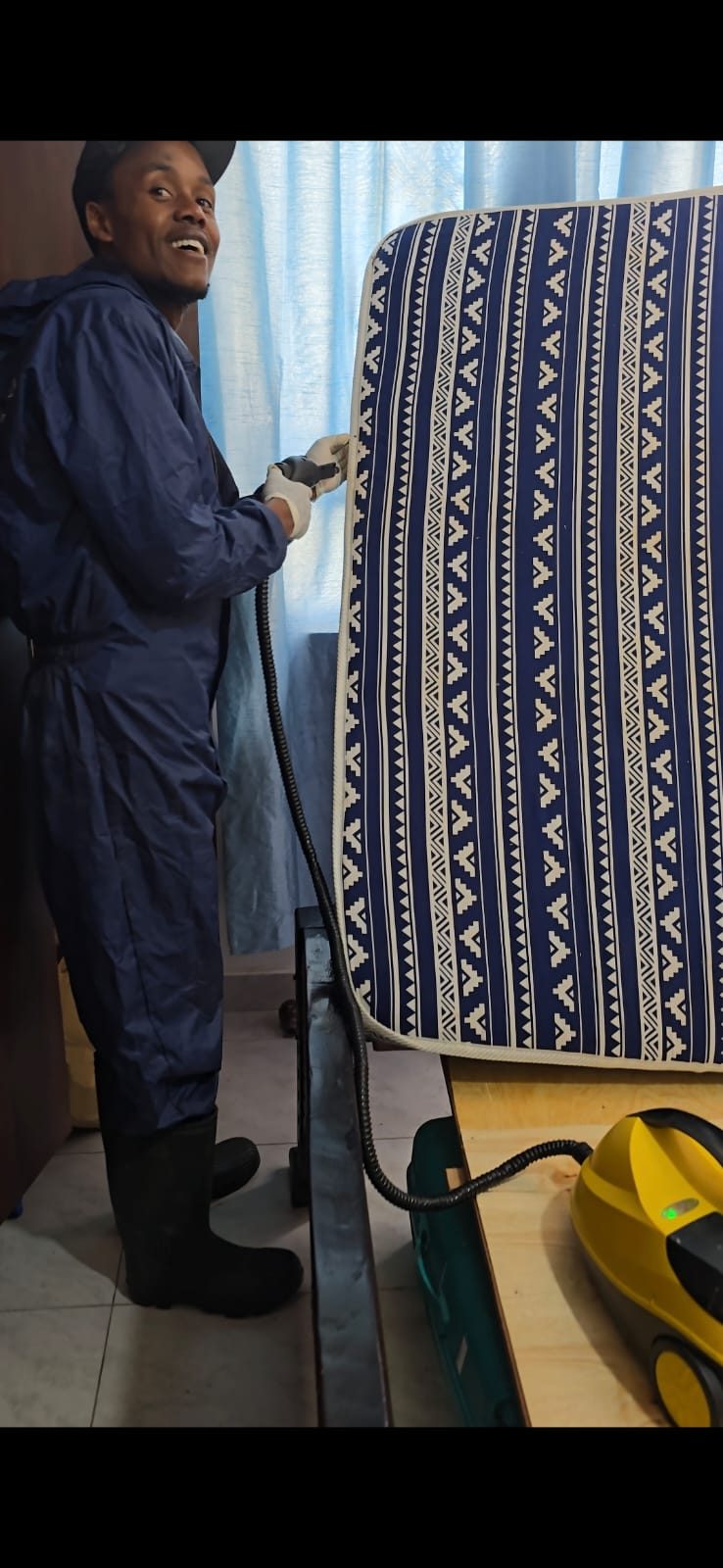
High-temperature steam kills eggs and adults on contact; residual insecticide keeps working on surfaces for weeks.
03
Planned second treatment
A follow-up visit 10–14 days later catches anything hatched — this step is where most one-shot jobs fail.
04
Prevention advice
Mattress encasement, laundry protocol and entry-point checks keep them from coming back.
Before we arrive
- Wash and hot-dry all bedding and clothing from affected rooms
- Reduce clutter — floor-level items especially
- Vacuum thoroughly and dispose of the bag outside
- Leave furniture in place for inspection (don't move it to other rooms)
After treatment
- Stay out of treated rooms until surfaces are dry
- Don't wash treated skirtings or frames for two weeks
- Keep the second-treatment appointment — it's essential
From recent jobs
Common questions
Do I have to throw away my mattress?
Almost never. Steam and encasement handle mattresses effectively. We only recommend disposal for severely torn, heavily infested pieces.
Why two treatments?
Eggs survive most chemicals. The second visit after hatching is what breaks the cycle — skipping it is why infestations 'come back'.
Can I sleep in the room during treatment?
Not on treatment night. Once dry (usually a few hours), normal use is fine — sleeping there actually draws activity to treated surfaces.